Connect findings with population cohorts (UK Biobank, Scallop, etc.) and other Olink datasets.

Connecting your proteomics data with other Olink datasets and population-scale resources helps you compare findings to other studies, explore biological context, and make more confident interpretations.
The Olink Data Ecosystem supports data integration through accessible datasets, normalization and bridging strategies, annotation tools, and expert guidance.

Research need
How Olink data integration helps
Connect findings with population cohorts (UK Biobank, Scallop, etc.) and other Olink datasets.
Enhance limited-sample studies by leveraging and cross-referencing existing large cohort datasets.
Standardize normalization and bridging functions for meaningful cross-study and cross-product comparisons.
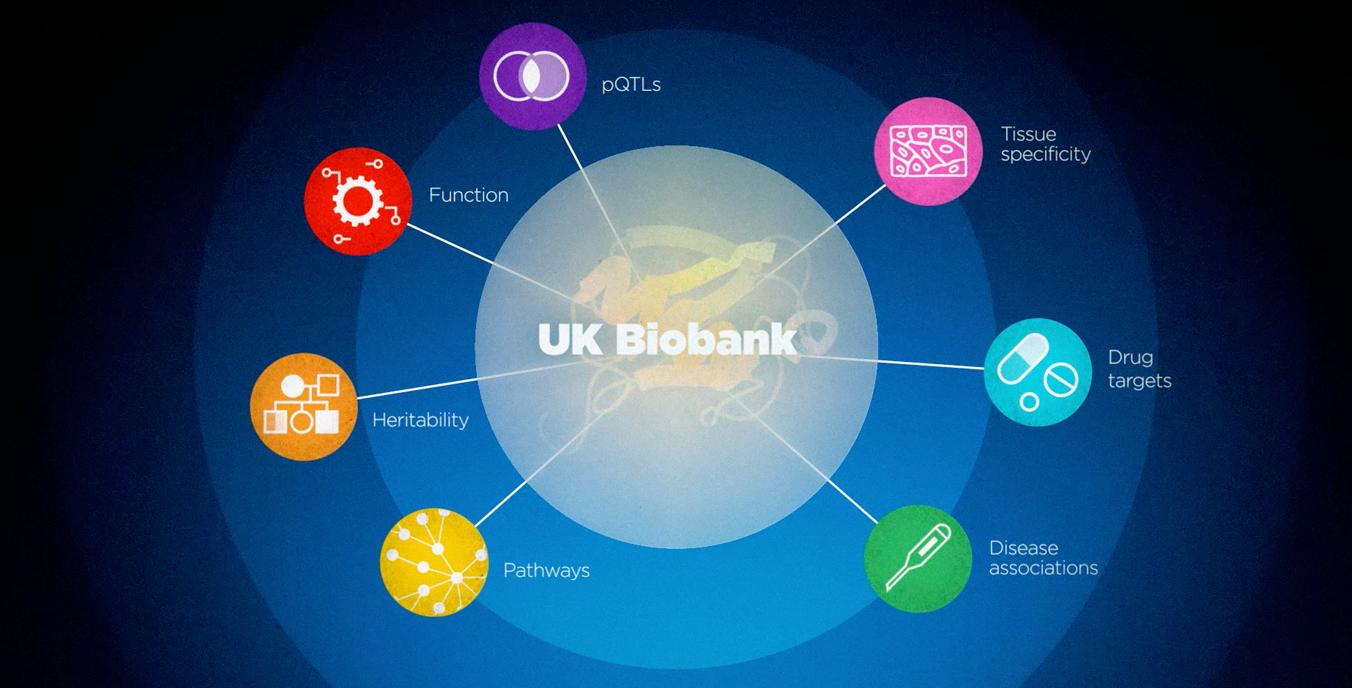
Annotate proteins with disease associations, normal ranges, pathways, and drug target status.
Access Olink tools and Data Science Services for guidance on study design and data integration strategy.
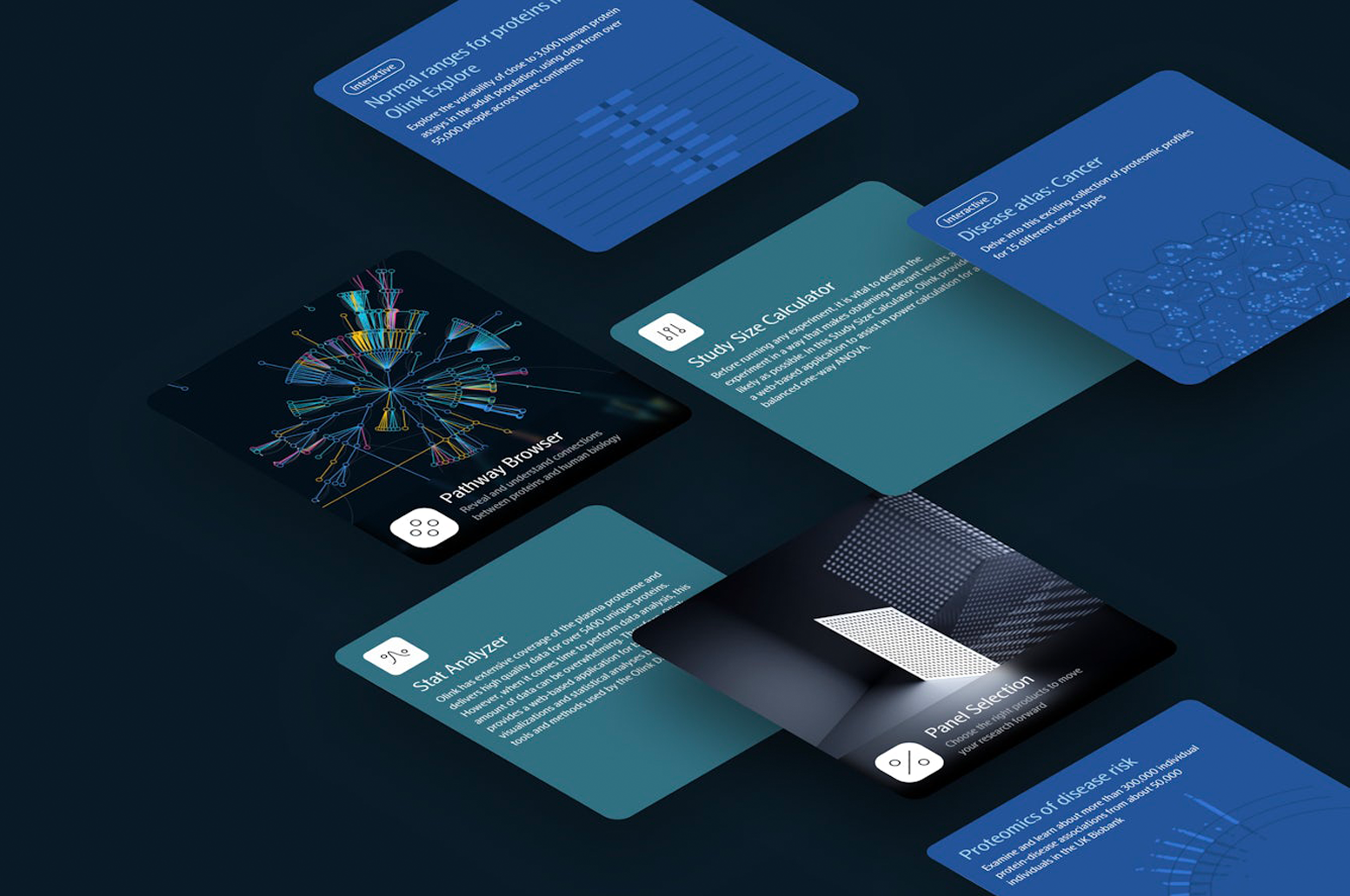
Olink Insight provides interactive data stories based on landmark datasets such as the UK Biobank, China Kadoorie Biobank, Arivale wellness cohort, and the Uppsala–Umea cancer cohort to:
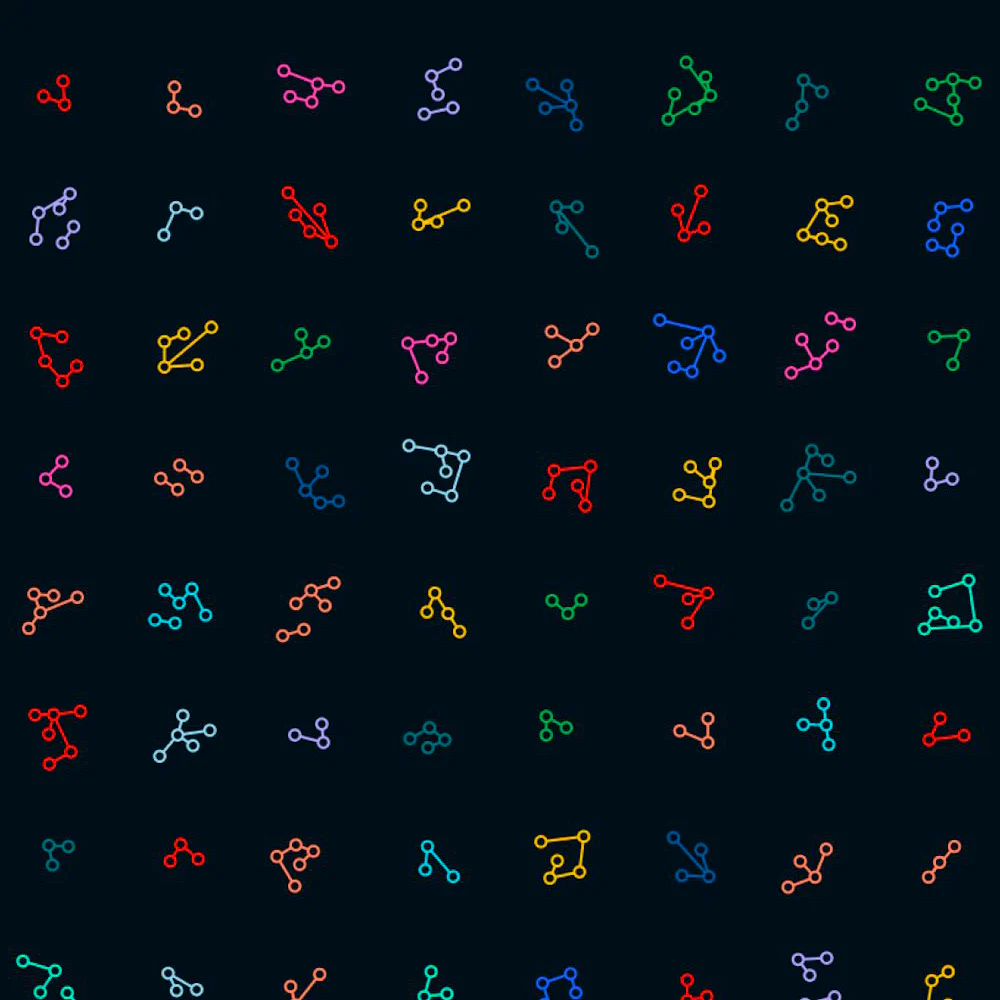
Explore these datasets, approaches, and tools that help you combine and compare Olink proteomic data across studies, unlock broader biological context, and prepare for integrated data analysis.
Ready to connect your data to a global proteomic network? Explore these resources to learn practical normalization strategies or engage with our Olink experts to accelerate your research.
Biobanks are becoming essential infrastructure for precision medicine, connecting biological samples with longitudinal clinical data at the scale needed for biomarker discovery, validation, and disease stratification.
This webinar will explore how researchers can leverage existing biobank and population-scale proteomics data more effectively. Using examples from large cohort initiatives, the session will show how researchers can contextualize biomarkers, validate findings across populations, strengthen study design, and interpret disease associations.